Enterprise SaaS • Feature
Making Enterprise Data Mapping Accessible

Overview
A technical workflow was blocking business users
The existing mapping experience relied on JSLT, making transformations difficult for non-technical users to understand and configure.
The challenge
- Mapping configurations often required technical support.
- Errors could disrupt integrations and delay deployment.
- Transformation logic was difficult to interpret.
Key insight
The opportunity was to make transformation logic accessible through the interface while preserving the control needed for complex configurations.
Solution
Reframing how users configure transformations
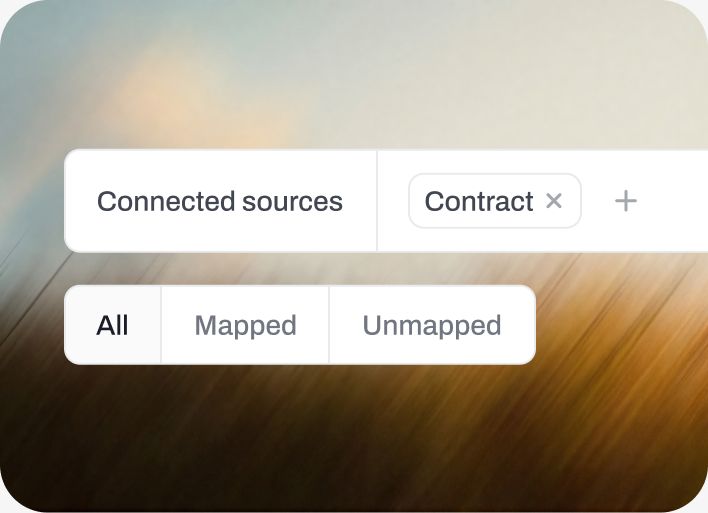
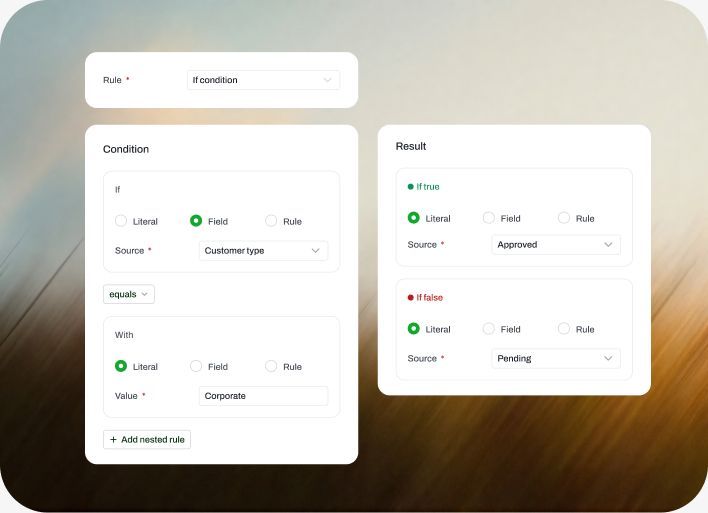
I redesigned the workflow around structured mapping rules, translating a code-centric process into a configurable interface built around how users inspect and manage transformations.
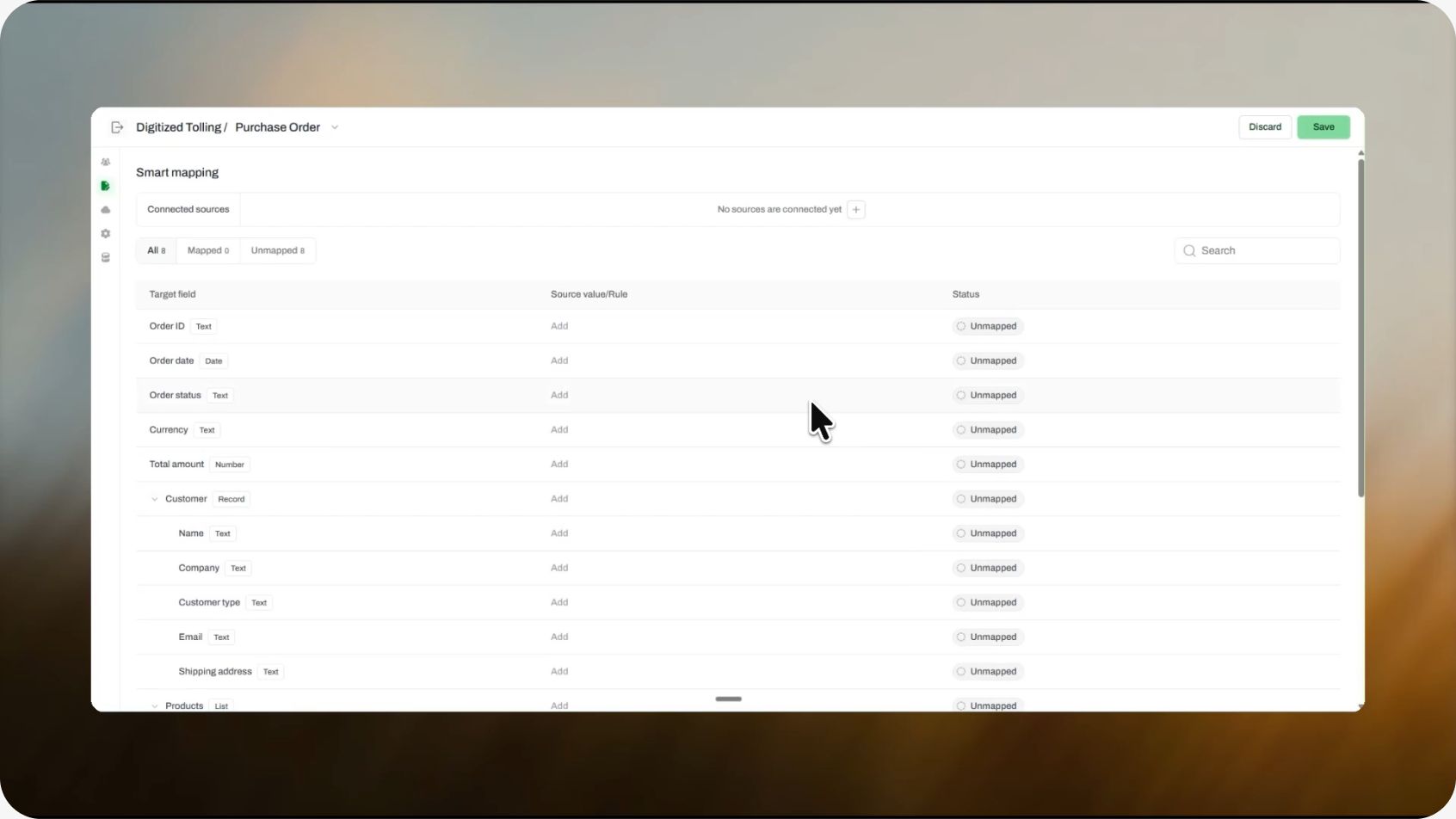
Turning transformation logic into configurable rules
I replaced direct JSLT editing with structured conditions and results, making the logic behind each mapping easier to inspect and configure.
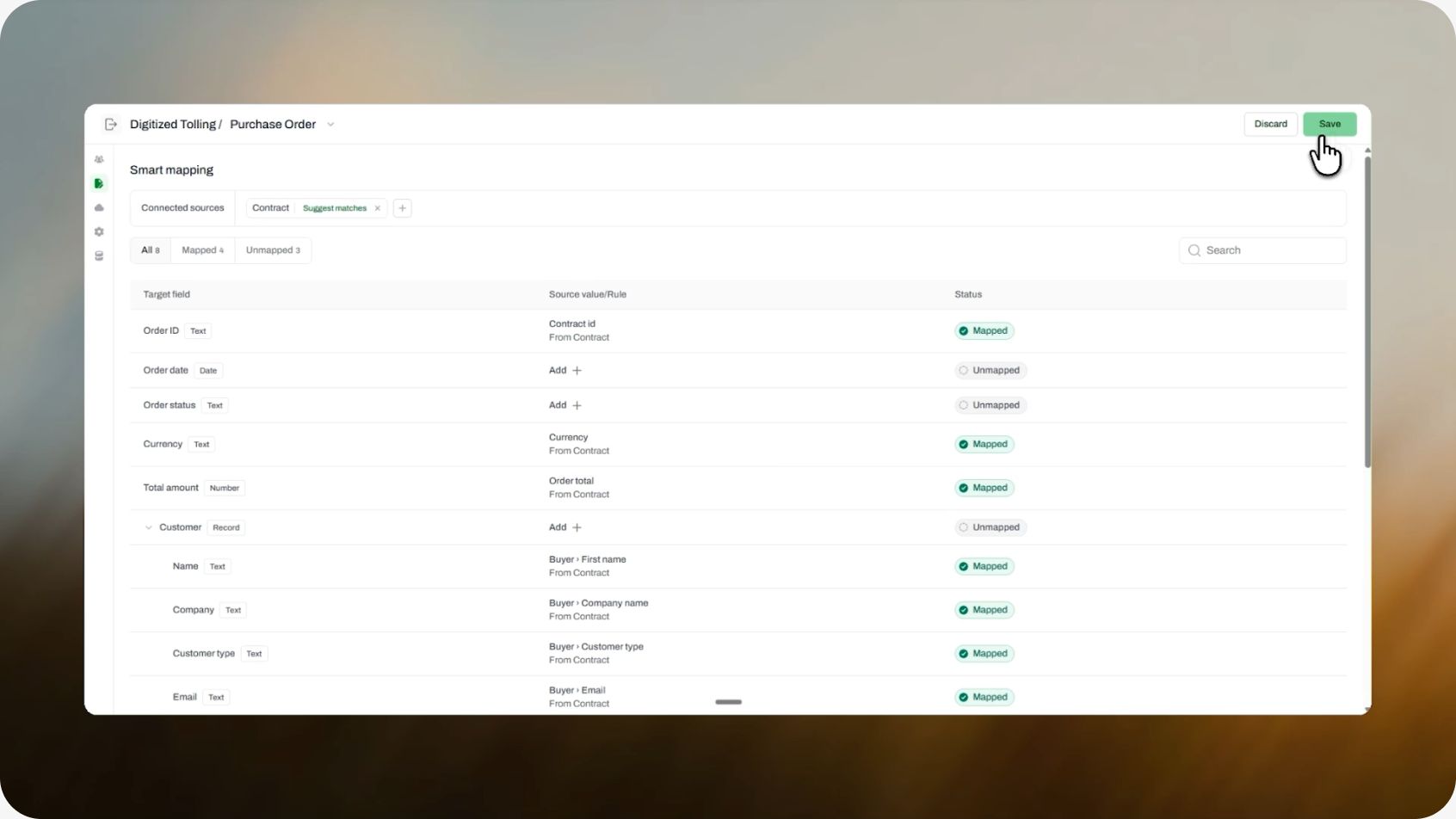
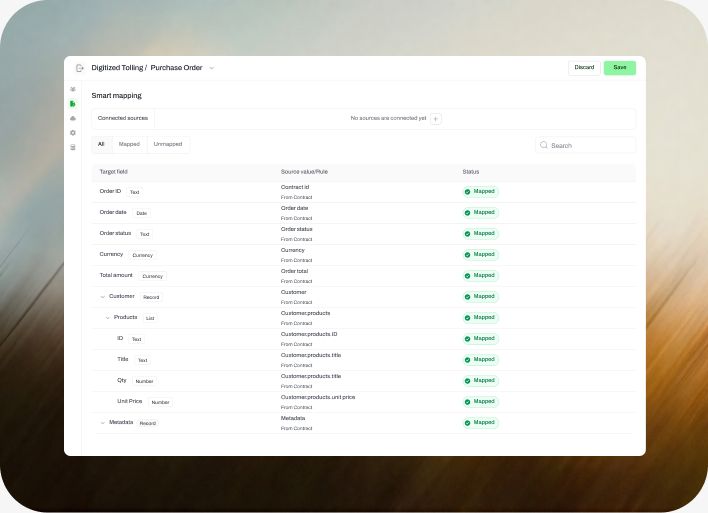
Final designs
Outcome
A mapping workflow built around user control
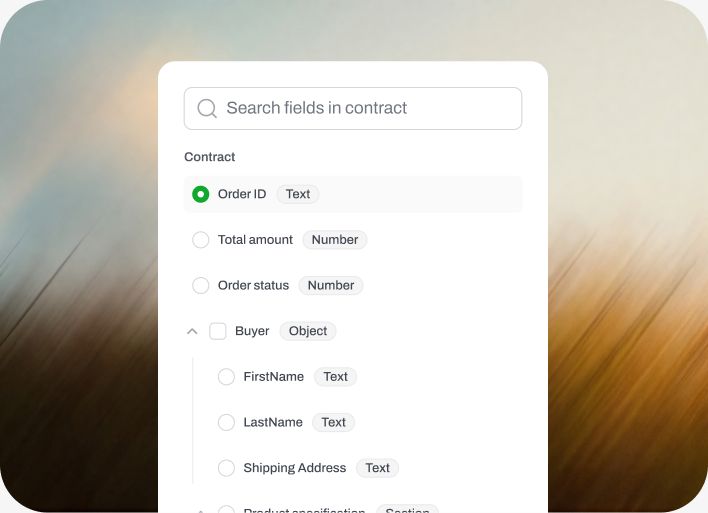
The redesigned experience shifts configuration from raw transformation syntax to structured rules, making mapping logic more visible within the workflow.
Independent configuration
A visual interface for managing mappings without directly editing JSLT.
Inspectable logic
Transformation conditions and results presented in a structured format.
Less engineering dependency
A more understandable workflow reduced the need for repeated technical intervention.
Reflection
Simplifying doesn't mean hiding complexity
The challenge was deciding which parts of the underlying logic users needed to see and control. Further validation would help establish how well the new interaction model supports increasingly complex mapping scenarios.
More projects
See all- NDA protected
Kotak Fyn - Leading Design for Enterprise Banking
Kotak Fyn - Leading Design for Enterprise Banking
2026Banking • NDA
Building an Enterprise Design System for Design-to-Code
Building an Enterprise Design System for Design-to-Code
2026B2B • Design system
Designing an Agentic Quality Intelligence Platform
Designing an Agentic Quality Intelligence Platform
2026B2B • Product design